Open Today Sales: 9 AM-7 PMOpen Today Service: 7 AM-6 PM
Covert Cadillac Bee Cave · Austin, Texas
Up to 317 miles, 150 kW DC fast charging, and a native NACS port that plugs into a Supercharger without an adapter.
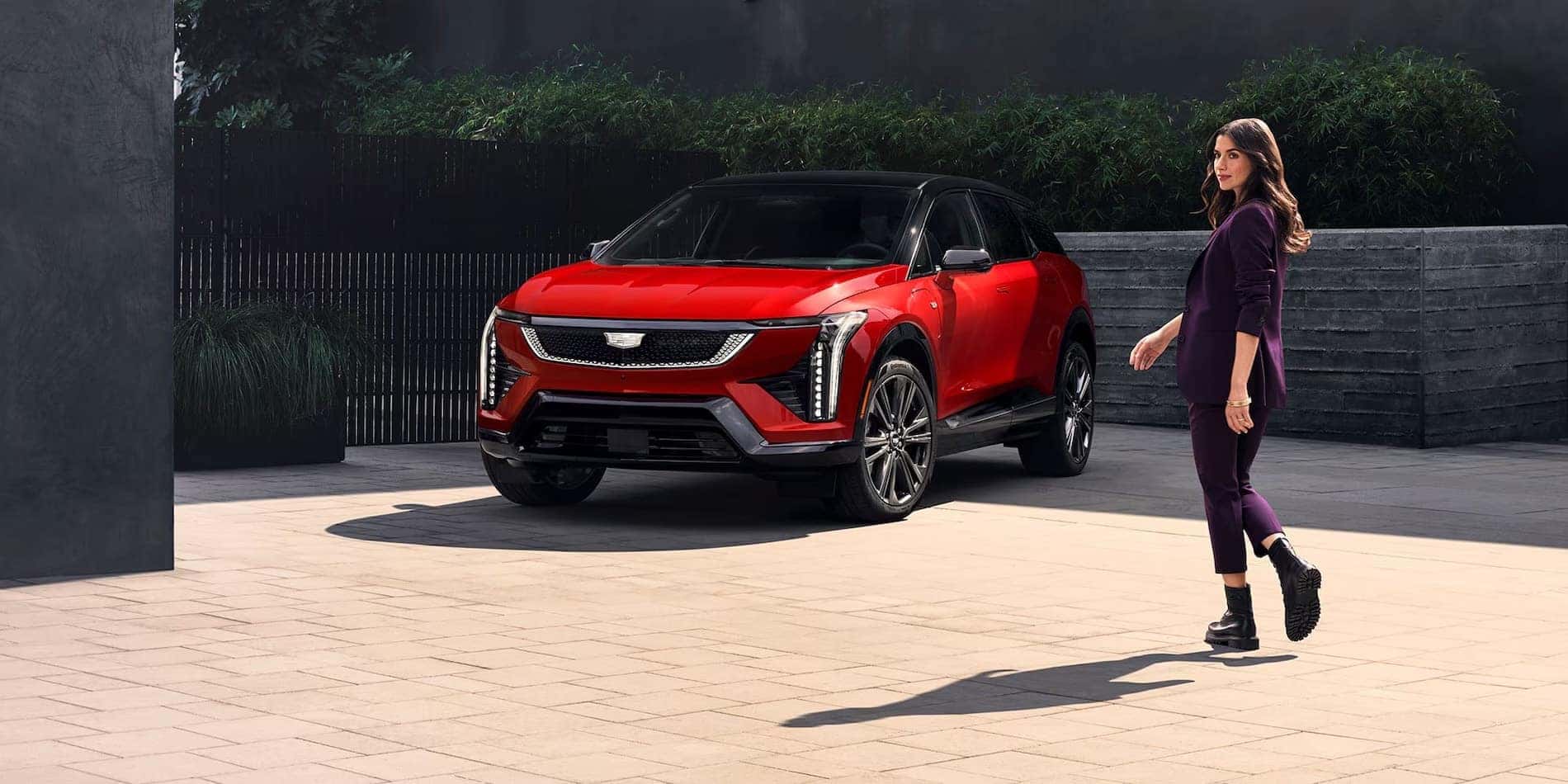
The 2027 Cadillac OPTIQ is rated at 317 miles in rear-wheel drive and 303 miles with all-wheel drive, on an 85 kWh useable battery. It takes up to 150 kW on a DC fast charger — about 81 miles of range in roughly 10 minutes — and it has a native NACS port, so it connects to a Tesla Supercharger with no adapter.
This page covers what those numbers mean day to day in Central Texas: how far you actually go, what charging at home costs you in time, what a road trip looks like, why heat matters more than cold here, and the one option on the OPTIQ-V that quietly costs 28 miles. For the rest of the car, see the 2027 OPTIQ overview or the full specifications.
The Numbers
| Configuration | Range | City MPGe | Highway MPGe | Combined |
|---|---|---|---|---|
| OPTIQ, rear-wheel drive | 317 miles | 117 | 93 | 105 |
| OPTIQ, all-wheel drive | 303 miles | 110 | 88 | 99 |
| OPTIQ-V, standard 11.5 kW charging | 278 miles | 103 | 81 | 92 |
| OPTIQ-V, available 19.2 kW charging | 250 miles | 92 | 74 | 83 |
Figures are the 2026 EPA certification, published at fueleconomy.gov; the powertrains and battery carry over unchanged for 2027. Your range varies with speed, temperature, terrain, load and how the battery is charged and maintained.
Read the highway column, not the combined one. On a petrol car the city figure is the pessimistic one; on an electric car it is the opposite, because stop-and-go driving recovers energy through regenerative braking and steady highway speed does not. Central Texas commuting is highway-dominant, so the number that describes most of your miles is 93 MPGe on the rear-drive car, not 105. Plan around that and the car will surprise you upward rather than downward.
The Trap
On the OPTIQ-V only, specifying the available 19.2 kW charging module drops the rating from 278 miles to 250 — 28 miles gone, and it’s a detail almost nobody hears before they order. The module arrives inside a charging and convenience package that also fits summer-only self-sealing tires, and the tires are as much of the cause as the charger.
On the four standard trims the same faster charger costs nothing at all. Rear-wheel drive certifies at 317 miles either way; all-wheel drive at 303 either way. That asymmetry is the whole point — if you are buying a standard OPTIQ and want faster home charging, take it without a second thought. If you are buying a V, decide whether the extra home-charging speed is worth 28 miles to you, and in most cases it is not.
| Choosing the 19.2 kW charger | Range cost | Verdict |
|---|---|---|
| On any standard OPTIQ trim | None | Take it if your home circuit supports it |
| On the OPTIQ-V | 28 miles, from 278 to 250 | Only if you genuinely need the faster refill |
At Home
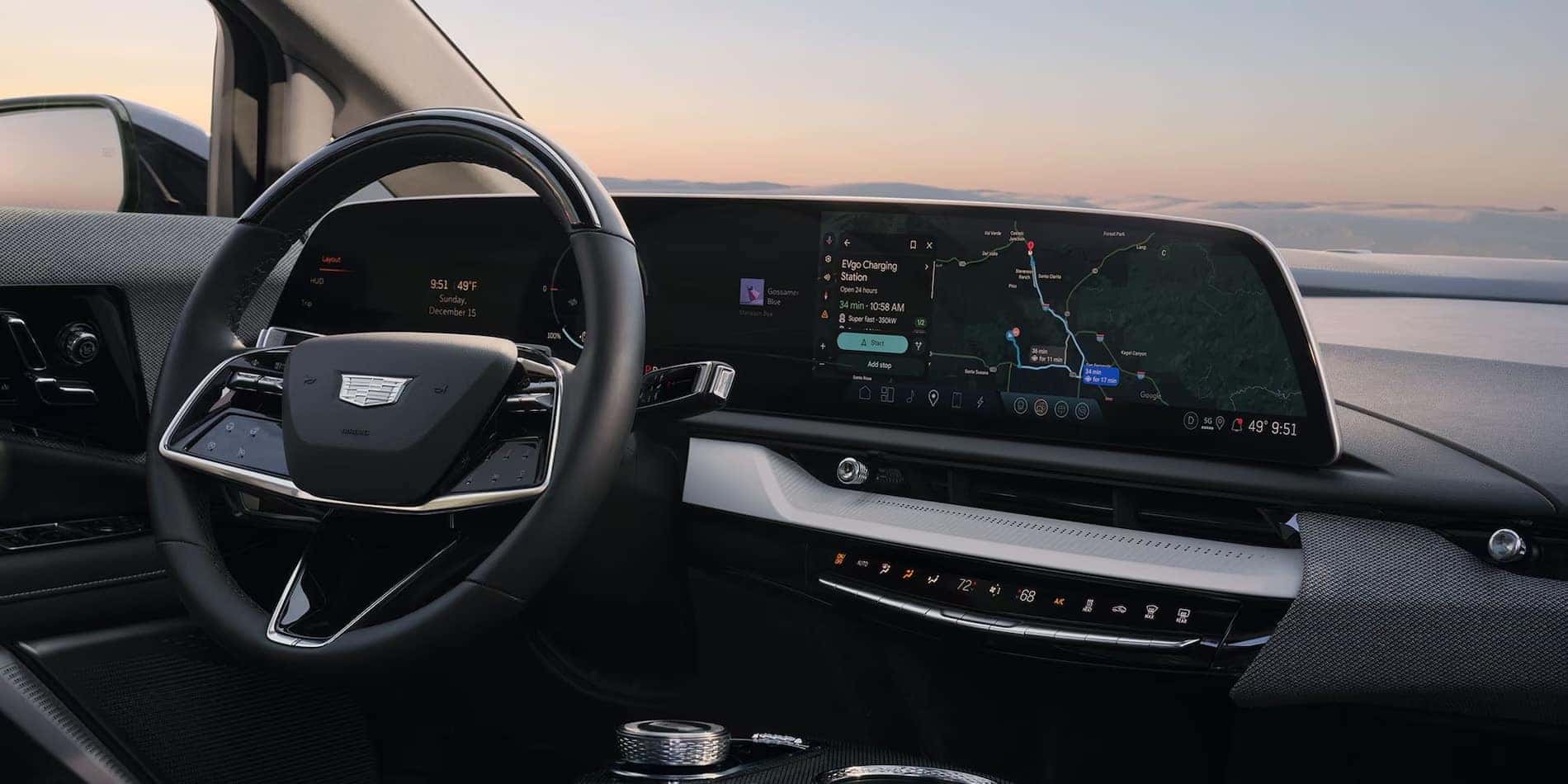
Most OPTIQ owners will almost never use a public charger. If you can plug in where you park, the car refills overnight and you leave every morning with a full battery — which is the part of electric ownership that nobody explains well before you buy.
| How you are plugged in | Range added per hour | What that means overnight |
|---|---|---|
| Included cord, standard household outlet | Up to 4 miles | Enough for a short commute, not enough to recover a big day |
| Included cord, 240-volt outlet | Up to 24 miles | Roughly 190 miles over an eight-hour night |
| Standard 11.5 kW onboard charger | Up to 36 miles (31 on the V) | A full battery from near empty in a normal night |
| Available 19.2 kW onboard charger | Up to 59 miles | Full in well under half a night, if your panel supports the draw |
A 20-foot dual-level charge cord rated at 7.7 kW is included with the vehicle. Home charging equipment and installation are separate purchases; a licensed electrician should assess your panel before any 240-volt work.
The honest guidance: the standard 11.5 kW charger is enough for almost everyone. It refills a nearly empty battery overnight, and the 19.2 kW unit only helps if you routinely arrive home late and empty and leave early and full. That is a real pattern for some drivers and rare for most. The OPTIQ is also capable of powering a home through Cadillac’s vehicle-to-home offering, which needs separately purchased equipment.
On the Road
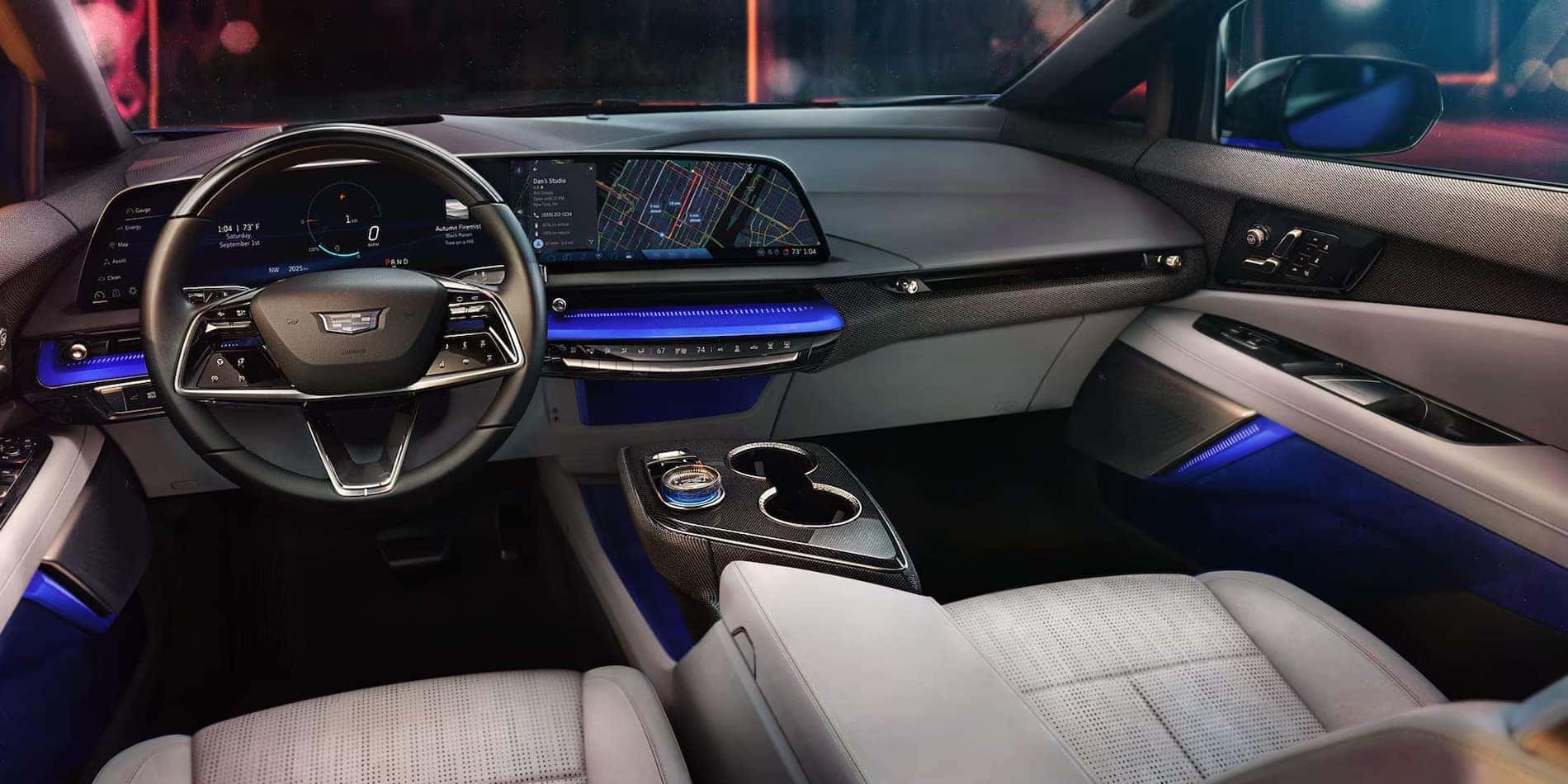
The OPTIQ accepts up to 150 kW on a DC fast charger, which Cadillac states as about 81 miles of range in roughly 10 minutes on the standard trims and 71 miles on the OPTIQ-V. In practice a fast-charge stop on a road trip is a coffee and a stretch, not a wait.
The bigger deal is the connector. The OPTIQ has a native NACS port built into the car, so it plugs directly into a Tesla Supercharger with no adapter and no dongle in the boot. Beyond that network it has access to a public charging network of more than 250,000 chargers, and a GM-approved adapter covers CCS and J1772 connectors where you find them. Worth knowing if you are cross-shopping model years: the OPTIQ adopted the native port at the previous model year, so this is not new for 2027 — it is simply already sorted.
What that adds up to on a trip out of Austin: San Antonio and back on the I-35 corridor, Waco and back, or a Hill Country loop through Fredericksburg and Llano all sit inside a single charge on a rear-drive OPTIQ. Houston or Dallas is one fast-charge stop each way. The stop is short enough that it lands where you would have stopped anyway.
Local Conditions
Most electric-vehicle range advice on the internet is written for cold climates and is close to useless here. Cold is the bigger enemy of battery range in general — but this region gets five months of serious heat and a handful of genuinely cold mornings, so the practical range question in Austin is an air-conditioning question, not a heating one.
The lever that actually matters is pre-conditioning on shore power. Cool the cabin while the car is still plugged in and the energy comes from the wall instead of the battery, so you pull away with a cold interior and a full charge. On a July afternoon in a car that has been sitting in a parking lot, that is the difference between arriving comfortable and watching the range estimate drop while you drive.
Two smaller habits are worth knowing. Parking in shade or a garage lowers the cooling load before you have spent a mile. And sustained high speed costs more range than heat does — the run west on US 290 at 75 miles per hour will move the estimate more than the air conditioning will.
In Practice
| If this is you | What to do |
|---|---|
| You commute under 50 miles a day and can plug in at home | Any OPTIQ, standard charger. You will charge roughly twice a week and never think about it. |
| You drive 100 miles or more most days | Rear-wheel drive for the 317-mile rating, and have a 240-volt circuit installed before delivery. |
| You cannot charge where you park | Be honest about it before you buy. Electric ownership works brilliantly with home charging and is a compromise without it — come and talk it through rather than guessing. |
| You take long highway trips several times a year | Fine on any trim. Plan around the highway MPGe figure and expect one short stop on a Dallas or Houston run. |
| You want the V and range still matters to you | Take the V without the charging package: 278 miles rather than 250. |
Find us at 16501 Sweetwater Village Drive, Building 2, in Austin. The charging conversation is worth having in person before you order, because the right answer depends on your panel, your parking and your commute rather than on the brochure. Book a test drive, see the OPTIQs in stock, or call (512) 900-7062. We serve drivers from Pflugerville, Manor and Bastrop, and the US 281 run north through the Highland Lakes toward Marble Falls is a good real-world range test if you want one.
Answers
317 miles in rear-wheel drive and 303 miles with all-wheel drive. The OPTIQ-V is rated at 278 miles with its standard charging module, or 250 miles with the available 19.2 kW charging package. All figures are the 2026 EPA certification, which applies because the powertrains and battery carry over unchanged for 2027.
With the standard 11.5 kW onboard charger the OPTIQ adds up to 36 miles of range per hour, which refills a nearly empty battery overnight. The available 19.2 kW charger adds up to 59 miles per hour. The included 20-foot cord adds up to 24 miles per hour on a 240-volt outlet and up to 4 miles per hour on a standard household outlet.
Yes, with no adapter. The 2027 OPTIQ has a native NACS charge port built into the vehicle, so it connects directly to a Tesla Supercharger. It also has access to a public charging network of more than 250,000 chargers, and a GM-approved adapter is available for CCS and J1772 connectors.
It accepts up to 150 kW, which Cadillac states as about 81 miles of range in roughly 10 minutes on the standard trims and 71 miles on the OPTIQ-V. Cadillac does not publish a ten-to-eighty-percent charging time for this vehicle.
Only on the OPTIQ-V, where the 19.2 kW charging package drops the rating from 278 to 250 miles because it also fits summer-only tires. On all four standard OPTIQ trims the faster charger costs no range at all: rear-wheel drive is rated 317 miles either way and all-wheel drive 303 miles either way.
Running the air conditioning uses energy that would otherwise be range, so a hot day costs you some. The practical fix is pre-conditioning the cabin while the vehicle is still plugged in, which draws that energy from the wall rather than the battery. Parking in shade helps too. Sustained high speed costs more range than heat does.
Yes, with one short fast-charge stop each way on a rear-drive OPTIQ. Shorter runs from Austin — San Antonio and back, Waco and back, or a Hill Country loop — sit inside a single charge. Plan around the highway MPGe figure rather than the combined one, because highway driving is the more demanding case for an electric vehicle.
85 kWh useable, and it is the same battery in every trim including the OPTIQ-V. Differences in rated range between configurations come from the motors, wheels and tires rather than from battery size. The battery is covered for 8 years or 100,000 miles and replaced if capacity falls below 75 percent.
The right charger for you depends on your panel, your parking and your commute. Come and work it out with us, then drive the car.
Range and MPGe figures are for comparison only; your results vary with speed, temperature, terrain, load and how the battery is charged and maintained. Charging times vary with charger output, battery temperature and state of charge. Home charging equipment and installation are separate purchases; consult a licensed electrician. Vehicle-to-home capability requires separately purchased equipment.